
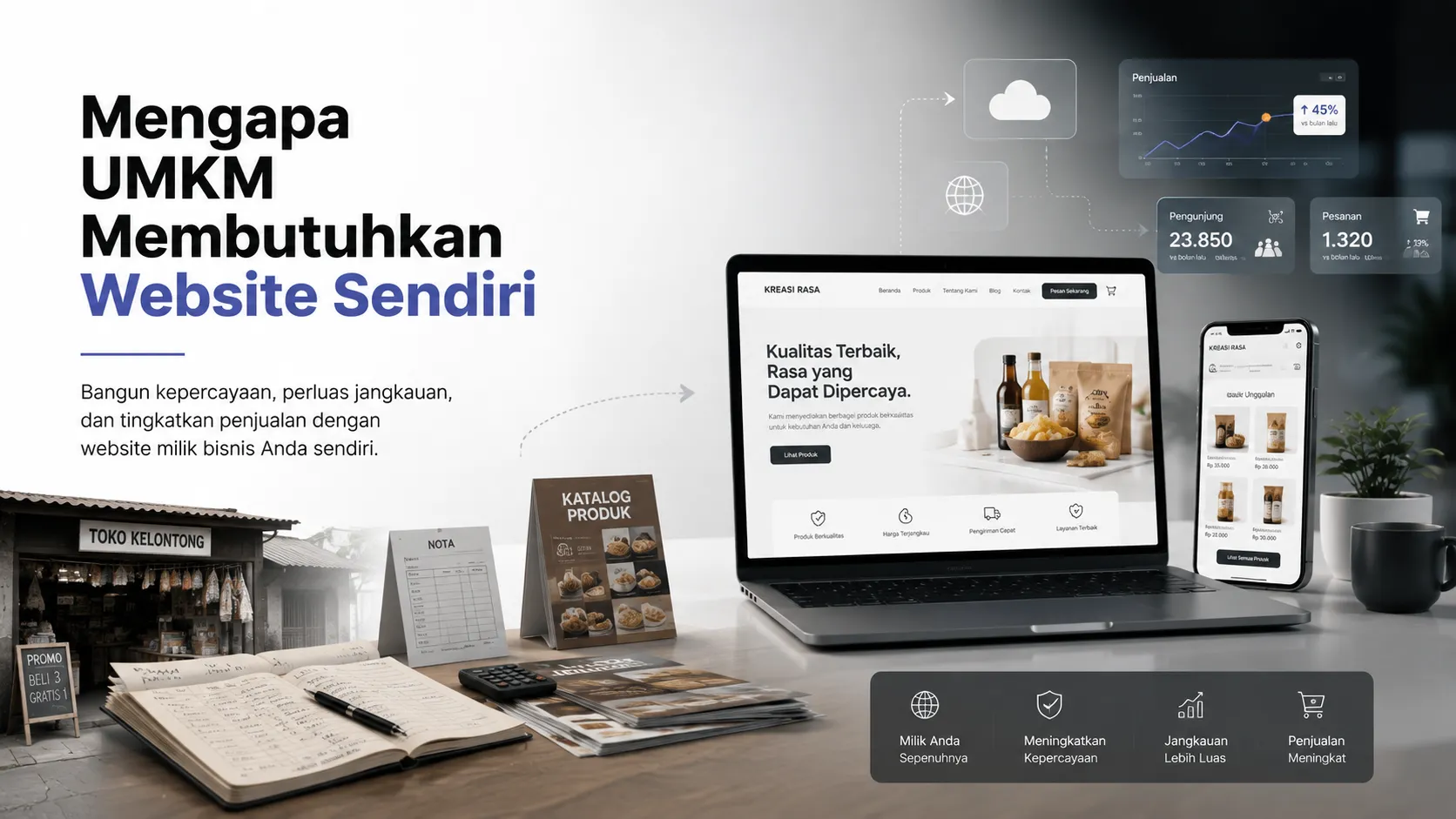
In a world where people search for information online before making a purchase, running a business without a clear digital presence can make it difficult for potential customers to find and trust you.
For small and medium-sized businesses, a website is no longer something reserved for large corporations. It can become a central place for business information, a trust-building tool, and a long-term digital asset that helps a business reach more customers.
The question is no longer “Does a small business need a website?”
The better question is:
“How many opportunities could a business be missing by not having its own website?”
1. Build Customer Trust
Before buying a product or hiring a service, potential customers often want to know whether a business is legitimate and trustworthy.
They may search for the business on Google, look at its products, learn about the company, or find a reliable way to get in touch.
A website gives a business a professional space to present its identity.
Company information, services, products, portfolios, testimonials, and contact details can all be presented in one place.
A well-designed website can create the impression that a business is serious, established, and ready to serve its customers.
2. Make Your Business Easier to Find
Social media is an effective way to communicate with customers. However, relying entirely on social platforms has its limitations.
Algorithms change. Organic reach can decline. Platforms can also introduce policies or changes that businesses cannot control.
A website gives a business a more independent digital asset.
With the right SEO strategy, website pages can appear when potential customers search for products or services related to the business.
For example, someone searching for “web design services for small businesses” could discover your website through search engines without first seeing an advertisement or following your social media account.
3. Own Your Digital Asset
One of the strongest reasons for having a website is simple: you own the digital foundation of your business.
Social media platforms belong to third parties. Businesses operate on those platforms according to rules and policies that may change.
A website provides much greater control.
Your domain, content, website structure, customer database, and business systems can be developed according to your needs.
As the business grows, the website can evolve from a simple company profile into a product catalog, online store, booking system, customer portal, or even a full business application.
4. Reach More Customers
A physical store has geographical limitations.
A website does not.
A small business that was previously known only within one city can introduce its products and services to customers across different regions or even internationally.
A website can also receive inquiries, quote requests, and orders beyond traditional business hours.
Customers do not necessarily have to wait for the store to open to find basic information.
In other words, a website allows your business to remain accessible even when you are not physically available.
5. Present Products and Services Professionally
Not every piece of business information belongs in a social media post.
A website provides a structured environment where customers can explore a business more easily.
A small business can showcase:
- Products and services
- Pricing or estimated costs
- Project portfolios
- Product photography
- Customer testimonials
- Company information
- Frequently asked questions
- Location and contact information
- Booking or consultation forms
Instead of scrolling through dozens of social media posts, customers can find the information they need in a single place.
6. Strengthen Your Marketing Strategy
A website does not have to replace social media.
The two can work together.
Social media can attract attention and create engagement. The website can then provide detailed information and guide visitors toward taking action.
For example:
Instagram → Website → Product → Checkout → Purchase
Or:
TikTok → Website → Portfolio → Consultation → Deal
This makes the website an important part of a broader digital marketing ecosystem rather than simply an online company profile.
7. Use Customer Data to Make Better Decisions
A website can also provide valuable insights into visitor behavior.
With the right analytics tools, business owners can understand which pages receive the most traffic, where visitors come from, which products attract the most attention, and what actions visitors take.
That information can support better business decisions.
Instead of saying:
“I think this product is popular.”
You can start saying:
“The data shows that this product receives the most interest and generates the strongest conversion rate.”
That shift from assumptions to data can make marketing and business decisions much more strategic.
8. Let the Website Grow With the Business
A small business does not need to launch a complicated website on day one.
It can start with a simple website containing company information, services, products, portfolio work, and contact details.
As the business grows, additional features can be introduced.
For example:
Stage 1: Company profile
Stage 2: Product catalog
Stage 3: Online ordering
Stage 4: Payment gateway
Stage 5: Customer dashboard
Stage 6: Internal system integration
This approach allows a business to build its digital presence gradually while keeping development aligned with real business needs.
A Website Is More Than a Digital Business Card
One common mistake is treating a website as nothing more than a digital business card.
In reality, a website can become part of the business itself.
It can function as a sales channel, marketing asset, customer service channel, product catalog, and data source at the same time.
The goal should not simply be to “have a website.”
The goal is to build a website that provides a useful customer experience and contributes to measurable business objectives.
Conclusion
For small and medium-sized businesses, having a website is no longer simply about keeping up with technology.
It is about building a digital foundation that the business can own, control, and develop over time.
Social media can help a business attract attention. Marketplaces can help generate transactions. But a website provides something different:
control over the business’s own digital identity and assets.
As customers increasingly search online before making decisions, businesses with a professional website have a stronger opportunity to be discovered, trusted, and chosen.
Ultimately, a website is not just about how your business appears on the internet.
It is about how your business prepares itself to grow within it.

No comments yet. Be the first to comment!