

Does a Small Business Need a Website?
In today's digital world, running a small business does not necessarily require a huge marketing budget. However, one question many small business owners ask is: does a small business really need a website?
The answer is yes, in many cases, a website can become one of the most valuable digital assets for a small business.
Social media is important. Marketplaces can also help businesses reach customers. But a website provides something different: a digital space that your business can own and control.
What Is a Business Website?
A business website is a digital platform used to introduce a company, its products, services, portfolio, contact information, and other important details to potential customers.
A website does not have to be complicated.
For a small business, a simple website with key pages such as Home, About, Services/Products, Portfolio, Contact, and Blog can already provide significant value.
What matters most is not how complex the website is, but how effectively it helps customers understand the business and make a decision.
1. Build Business Credibility
When people discover your business through Google or social media, they may look for additional information before deciding whether to contact you.
A professional website can help create the impression that your business is established, trustworthy, and serious about what it does.
Imagine two businesses offering similar services. The first only has a social media profile with limited information. The second has a professional website explaining its services, portfolio, contact details, and customer testimonials.
A website does not automatically make the second business better, but it can strengthen trust and perceived professionalism.
2. Help Customers Find You on Google
One of the biggest advantages of having a website is the opportunity to appear in search engine results.
People search for things such as:
"affordable web design services"
"catering for events"
"motorcycle repair near me"
"professional photography services"
"custom furniture store"
A relevant business website may appear when potential customers search for these services.
With a solid Search Engine Optimization (SEO) strategy, a website can generate organic traffic and help small businesses reach new potential customers.
3. Your Business Is Open 24/7
Social media often requires businesses to continuously publish new content to maintain visibility.
A website works differently.
Your business information can remain available 24 hours a day.
Potential customers can visit your website whenever they need information about:
Products
Prices
Services
Location
Business hours
Portfolio
Testimonials
Contact information
In other words, your website can function as a digital storefront that never closes.
4. Provide More Complete Information
Social media platforms are generally designed for short, fast-consumption content.
A website gives you much more space to explain your business.
You can clearly communicate:
Who you are
What you offer
What problems you solve
Why customers should choose you
How your process works
Your pricing or service packages
How customers can place an order
Detailed information can reduce uncertainty and help customers feel more confident before contacting your business.
5. Reduce Dependence on Social Media
Social media is powerful, but relying entirely on social platforms can create risks.
Algorithms change. Organic reach can decline. Platforms can change their policies, features, or business models.
A website gives your business a digital asset that you have significantly more control over.
Social media should be treated as a marketing channel, while your website can serve as the central hub for your business information.
They do not have to compete with each other. In fact, they can work together.
6. Generate Leads and Sales
A website should not simply display information.
With the right structure, it can be designed to encourage visitors to take action.
For example:
Visitor → Reads information → Explores services → Views portfolio → Contacts the business
Effective calls to action can include:
"Contact Us"
"Order Now"
"Request a Quote"
"Book a Consultation"
"View Products"
These elements guide visitors toward the action that matters most to your business.
7. Make Your Business Look More Professional
Branding is about more than having a logo.
Your website is also an important part of your visual identity.
Consistent design, clear copywriting, high-quality images, organized page structure, and a good user experience can make a small business appear more professional.
This is particularly valuable for service-based businesses such as:
Web developers
Digital agencies
Photographers
Consultants
Freelancers
Architects
Designers
Event organizers
8. Turn Your Website Into a Portfolio
For service-based businesses, a portfolio can play an important role in a customer's decision-making process.
Instead of simply posting projects on social media, you can create dedicated portfolio pages on your website.
Each project can include:
Photos or screenshots
Project descriptions
Challenges
Solutions
Technologies used
Results
Client testimonials
Your website can therefore show not only what you do, but also what you have accomplished.
9. Connect Your Website with Other Tools
Modern websites can integrate with a wide range of digital tools and services.
For example:
WhatsApp
Email
Google Maps
Payment gateways
Booking systems
CRM platforms
Newsletters
Analytics
Marketplaces
Social media
This means a website can evolve from a simple information page into an important part of your business operations.
10. Does Every Small Business Need a Website?
Not necessarily.
If a business is still in its earliest stage and has a very limited budget, it may make more sense to prioritize product development, customer service, and market validation first.
However, as the business grows, a website can become an increasingly valuable investment.
The question is not simply:
"Do I need a website?"
A better question is:
"Can a website help my business attract customers, build trust, and increase sales?"
If the answer is yes, then a website is worth considering.
A Website Doesn't Have to Be Expensive
One common misconception is that building a website always requires a large investment.
In reality, a small business can start with a simple website and expand over time.
You can begin with:
A professional domain
Suitable hosting
A simple business website
Clear business information
WhatsApp or contact integration
A portfolio or product catalog
Basic SEO optimization
As the business grows, additional features can be added based on actual needs.
Conclusion
Does a small business need a website?
In many cases, yes.
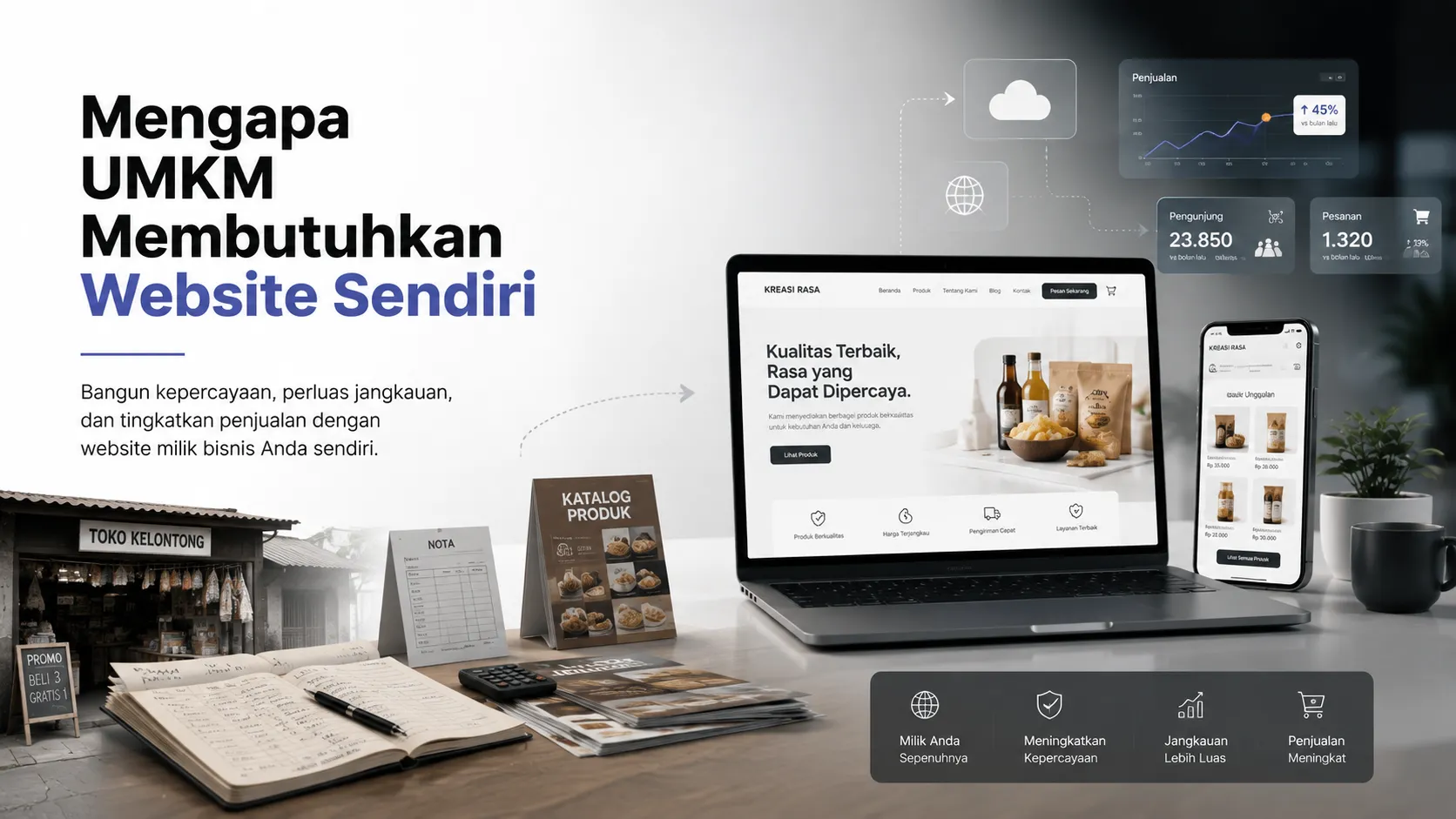
A website can help improve credibility, expand visibility through Google, provide complete business information, reduce dependence on third-party platforms, and generate leads and sales.
However, a website is not a magic solution.
An effective website requires a combination of good design, relevant content, SEO, performance, security, and a clear marketing strategy.
So don't build a website simply because other businesses have one.
Build a website because you understand how it can contribute to your business growth.
For a small business, a simple but strategically designed website can often be far more valuable than an expensive website without a clear purpose.
No comments yet. Be the first to comment!