
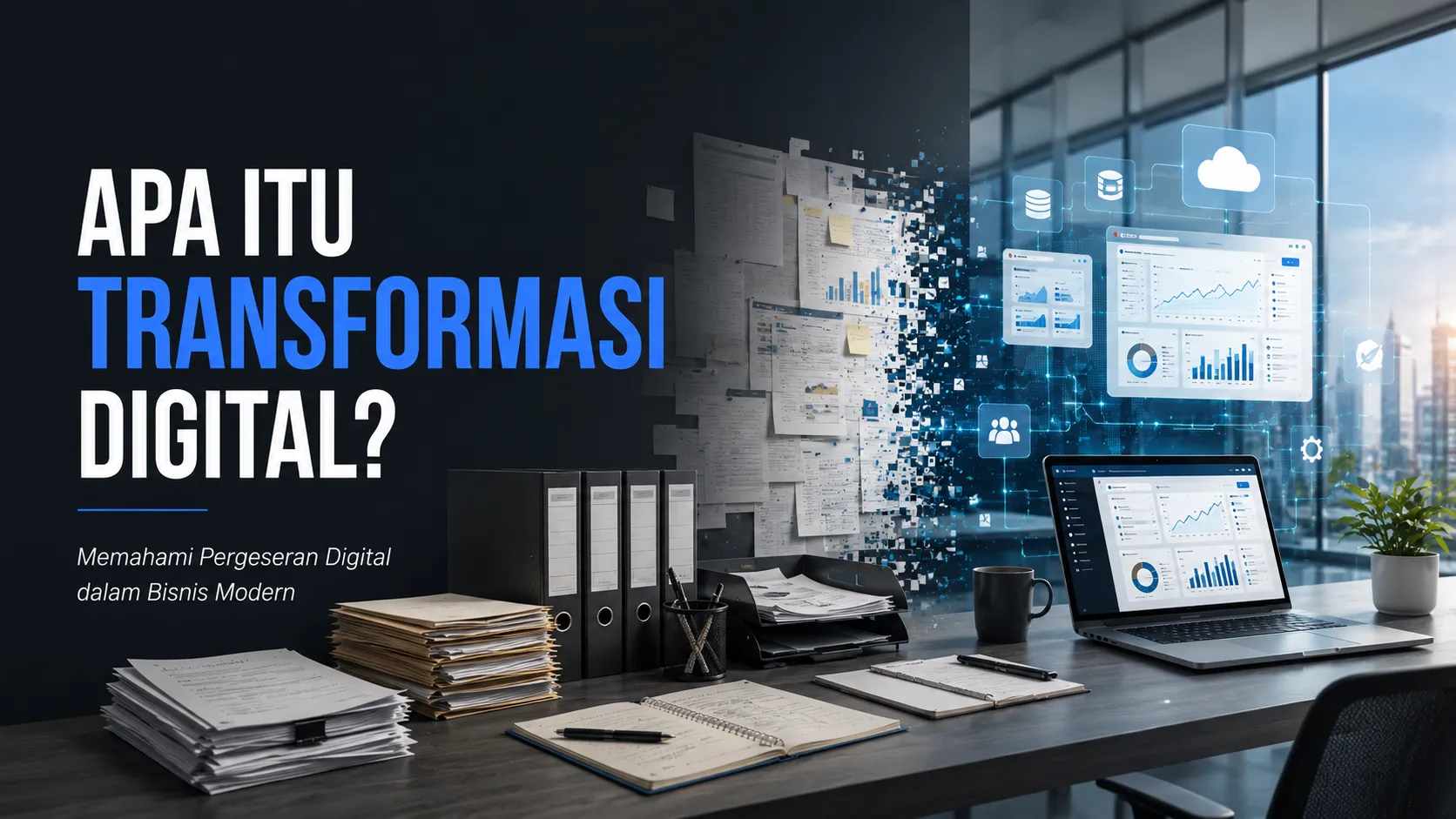
Digital transformation is often associated with new software, cloud computing, artificial intelligence, or moving business operations online.
But technology itself is only part of the story.
Digital transformation is fundamentally about changing the way an organization operates, makes decisions, serves customers, and creates value by using digital technology.
For some businesses, that may mean replacing manual processes with automated systems. For others, it may involve building an entirely new digital business model.
The scale may be different, but the objective is similar: use technology to build a better way of doing business.
What Is Digital Transformation?
Digital transformation is the process of integrating digital technology into different areas of a business to improve operations, customer experiences, decision-making, and overall business performance.
It can happen at many levels.
A small retailer, for example, might start by introducing digital payments, inventory software, and an online ordering system.
A larger organization may go much further by connecting customer data, finance, operations, marketing, analytics, and internal systems through a unified digital ecosystem.
The important point is that digital transformation is not measured by the number of technologies a company adopts.
It is measured by the business impact those technologies create.
Digital Transformation vs. Digitization
These terms are often used interchangeably, but they are not the same.
Digitization is the process of converting information from a physical format into a digital one. Scanning a paper document and turning it into a PDF is a simple example.
Digitalization goes a step further by using technology to improve an existing process. A company might replace paper-based leave requests with an online approval system.
Digital transformation, however, involves a broader change.
Instead of simply replacing a paper form with a digital form, the organization may rethink the entire process.
Does the process still need to exist? Can it be simplified? Can the information collected from it help management make better decisions?
That shift in thinking is at the heart of digital transformation.
Why Does Digital Transformation Matter?
Customer expectations have changed significantly.
People are increasingly comfortable researching products online, making payments through their phones, booking services digitally, and expecting fast responses from businesses.
At the same time, businesses are dealing with increasingly complex operations and larger amounts of data.
Digital transformation can help organizations respond to these changes more effectively.
1. Improve Operational Efficiency
Automation can reduce repetitive manual work and minimize human error.
Tasks such as reporting, data entry, invoicing, inventory management, and internal approvals can often be streamlined through digital systems.
This allows employees to spend more time on work that requires judgment, creativity, and problem-solving.
2. Deliver Better Customer Experiences
Digital tools can make customer interactions faster and more convenient.
Online booking, customer portals, mobile applications, digital payments, live chat, and personalized recommendations are just a few examples.
The goal is not simply to offer more digital features. It is to remove friction from the customer journey.
3. Make Better Decisions with Data
Modern businesses generate enormous amounts of data.
Sales transactions, customer interactions, website activity, marketing performance, and operational metrics can all provide valuable insights.
With the right systems in place, organizations can turn this information into actionable insights and make decisions based on evidence rather than assumptions alone.
4. Create New Business Opportunities
Digital transformation can do more than improve existing operations.
It can also create entirely new products, services, and revenue streams.
Subscription businesses, SaaS platforms, digital marketplaces, online services, and platform-based business models are examples of how technology can reshape the way companies create and capture value.
5. Stay Competitive
Markets can change quickly.
A competitor that provides a faster, simpler, or more personalized customer experience can quickly change customer expectations across an entire industry.
Digital transformation gives businesses the ability to adapt faster and respond to changing market conditions.
Real-World Examples of Digital Transformation
Digital transformation looks different from one industry to another.
Retail
A traditional retailer can evolve into an omnichannel business by connecting physical stores with an e-commerce website, marketplaces, digital payments, customer data, and inventory management.
Banking
Banking services that once required a visit to a branch can now be accessed through mobile applications.
Customers can transfer money, pay bills, open accounts, and manage financial products without visiting a physical location.
Healthcare
Healthcare organizations can use electronic medical records, online appointment systems, digital payment solutions, patient portals, and integrated operational dashboards to improve both patient and organizational experiences.
Education
Schools and universities can adopt learning management systems, online classrooms, digital assessments, and communication platforms to support students and teachers.
Manufacturing
Manufacturers can use IoT sensors, automation, predictive maintenance, analytics, and real-time production monitoring to improve productivity and reduce operational downtime.
The technologies may vary, but the underlying objective remains the same: create a more efficient and valuable way of operating.
Technologies Commonly Used in Digital Transformation
There is no single technology that defines digital transformation.
Depending on the organization’s needs, a transformation strategy may involve:
- Cloud computing
- Artificial Intelligence (AI)
- Machine Learning
- Internet of Things (IoT)
- Big Data and analytics
- Business process automation
- Enterprise software
- Mobile applications
- APIs and system integration
- Cybersecurity
- Digital payment systems
- Customer Relationship Management (CRM)
The key is choosing technology based on business requirements.
Adopting technology simply because it is popular can increase costs and complexity without producing meaningful business value.
How to Start a Digital Transformation
Successful transformation usually starts with a business problem rather than a technology trend.
Begin by examining how the organization currently works.
Which processes take too much time? Where do errors frequently occur? Which activities cost more than they should? Where are customers experiencing unnecessary friction?
Once these problems are understood, technology can be evaluated as a potential solution.
A practical approach might look like this:
1. Identify the business problem
Start with a specific problem that needs to be solved.
2. Map the existing process
Understand how the work is currently performed and where the bottlenecks are.
3. Prioritize opportunities
Not every process needs to be transformed at once. Focus on areas where digital improvements can create the greatest impact.
4. Choose the right technology
The technology should serve the business strategy, not dictate it.
5. Prepare the people
Employees need to understand both the reason for the change and how the new system will improve their work.
6. Implement incrementally
Large transformation programs can often be broken down into smaller projects that are easier to manage and measure.
7. Measure the results
Track meaningful outcomes such as reduced processing time, lower operating costs, increased productivity, improved customer satisfaction, or additional revenue.
Common Challenges
Digital transformation is rarely just a technical project.
One of the biggest challenges is resistance to change.
Employees who have worked with familiar processes for years may initially struggle with new systems or feel uncertain about how their roles will change.
Organizations may also face:
- Digital skills gaps
- Legacy systems
- Integration problems
- Implementation costs
- Cybersecurity risks
- Data privacy concerns
- Lack of leadership support
- Unclear digital strategy
This is why digital transformation cannot be owned by the IT department alone.
Business leaders, operations teams, finance, marketing, customer service, and employees across the organization all have a role to play.
Is Digital Transformation Only for Large Companies?
Absolutely not.
Small businesses and startups can benefit from digital transformation as well.
In fact, smaller organizations can sometimes move faster because they have fewer layers of decision-making.
A small business could begin with relatively practical improvements:
- Digital point-of-sale systems
- A business website
- Customer relationship management
- Digital inventory management
- Online payments
- Cloud-based collaboration
- Online ordering
- Business analytics
Digital transformation does not necessarily require a massive technology budget.
What matters more is identifying the right problem and applying the right solution.
The Future of Digital Transformation
Digital transformation will continue to evolve as technologies such as artificial intelligence, automation, cloud computing, cybersecurity, and data analytics become increasingly accessible.
But technology will remain a tool rather than the destination.
The organizations that succeed will not necessarily be those using the most sophisticated technology.
They will be the ones capable of combining technology with strong business strategy, capable people, efficient processes, and a clear understanding of customer needs.
Conclusion
Digital transformation is a fundamental change in how organizations use technology to operate, serve customers, make decisions, and create value.
It is not simply about replacing paper with software or putting an existing process online.
True transformation requires organizations to rethink processes, develop their people, adapt their culture, and use technology with a clear business purpose.
For businesses trying to remain relevant in an increasingly digital economy, the question is no longer whether digital transformation matters.
The more important question is:
Which part of the business should be transformed first?
Because the best technology is not necessarily the most advanced technology.
It is the technology that solves a real problem and helps the business work better.


No comments yet. Be the first to comment!